
If your jaw clicks when you chew, aches when you wake up, or sometimes feels like it does not want to open all the way, you are not alone. Problems with the temporomandibular joint, usually shortened to TMJ, are surprisingly common, and they often flare during stressful, busy stretches of life.
At Belman Dental Centre in Midtown Toronto, we help patients from Davisville, Eglinton, and the surrounding neighbourhoods figure out what is behind their jaw discomfort and what to do about it. The reassuring news: most TMJ-related problems respond well to conservative, non-surgical care.
What Is the TMJ, Exactly?
The temporomandibular joint is the hinge that connects your lower jaw to your skull, just in front of each ear. It works together with the muscles of your face every time you chew, speak, yawn, or swallow, which is why even a small irritation here can become hard to ignore.
When something goes wrong with the joint, the disc inside it, or the muscles that move it, dentists group those problems under the term TMD, short for temporomandibular disorder.
Common Signs of a TMJ Problem
TMD can look different from person to person, but some of the most frequent complaints we hear include:
One important note: a painless click by itself is very common and often does not need treatment. Pain, limited movement, and worsening symptoms are the reasons to get checked.
- Pain or tenderness in the jaw, face, or around the ear
- Clicking, popping, or grinding sounds when opening or closing the mouth
- Difficulty or discomfort while chewing
- A jaw that feels stiff, tired, or temporarily stuck
- Frequent headaches, especially in the morning
- Worn, flattened, or sensitive teeth from clenching and grinding
- Aching in the neck and shoulders that seems connected to the jaw
What Causes TMJ Discomfort?
Usually there is no single cause. TMD tends to be a mix of factors, such as:
Because these causes overlap, a careful evaluation matters.
- Clenching and grinding (bruxism). Many people grind their teeth at night without knowing it, putting enormous pressure on the joint and muscles while they sleep.
- Stress. Tension often shows up physically as jaw clenching during the day, at a desk, in traffic, or during a tough week.
- Bite and alignment issues. The way the teeth fit together can influence how the joint is loaded.
- Injury. A blow to the jaw or a whiplash-type injury can trigger symptoms.
- Arthritis. Like other joints, the TMJ can be affected by joint conditions over time.
Everyday Habits That Make Jaw Pain Worse
While you are waiting for your appointment, or alongside treatment, a few small changes can take real pressure off the joint:
None of these replace an evaluation, but together they often ease symptoms while treatment does its work.
- Cut back on gum and chewy or crunchy foods during flare-ups. Bagels, tough steak, and hard candy ask a lot of an irritated joint.
- Notice daytime clenching. Many people hold their teeth together when concentrating. The resting position should be lips together, teeth apart.
- Watch your posture. Hours hunched over a laptop strain the neck and jaw muscles. Screens at eye level help more than you would expect.
- Avoid resting your chin on your hand or cradling the phone on your shoulder.
- Skip the wide yawns. Support your jaw with your hand during a sensitive period.
- Try warm compresses on the jaw muscles for ten to fifteen minutes to relax tension before bed.
The Connection Between Grinding and TMJ
Nighttime grinding, also called bruxism, is one of the biggest drivers of jaw pain we see. During sleep, the jaw muscles can generate far more force than they do while you are awake, and that force lands on the teeth, the muscles, and the joint for hours at a time.
Common clues include waking with a dull headache or tired jaw, a partner who hears the grinding, and teeth that look flattened or chipped along the edges. We look for these wear patterns during your exam, because treating the grinding often relieves the jaw pain that comes with it.
How We Evaluate Jaw Pain
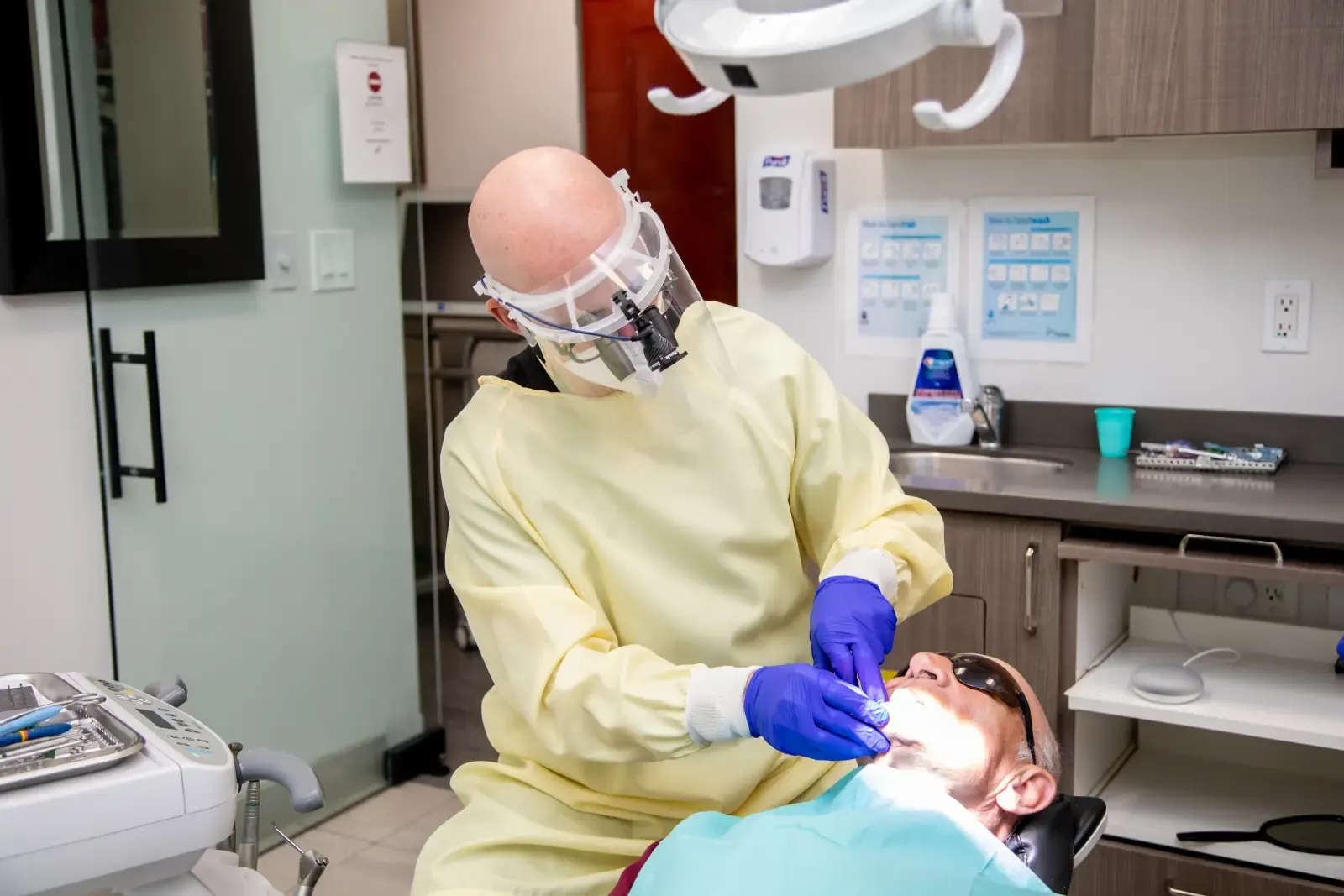
When you come in with jaw discomfort, we start by listening. Dr. Belman or Dr. Shah will ask about your symptoms, stress, sleep, and when the pain flares. Then we will:
From there, we explain what we found in plain language and walk through realistic options before recommending anything.
- Gently examine the jaw joints and the muscles of the face and neck
- Check how your jaw moves and whether the opening is limited
- Look at your teeth and bite for signs of grinding or wear
- Take digital X-rays or other imaging only when clinically appropriate
Conservative Treatment That Actually Helps
Most TMJ problems improve without surgery. Depending on what we find, treatment may include:
The goal is always the same: the simplest approach that genuinely relieves your symptoms, reviewed and adjusted as you improve.
- A custom night guard. A precisely fitted guard worn during sleep cushions the teeth and reduces the strain that grinding puts on the joint and muscles. Learn more about our custom night guards.
- Self-care strategies. Softer foods during flare-ups, avoiding gum, warm compresses, and simple jaw relaxation habits.
- Stress and habit coaching. Becoming aware of daytime clenching is often half the battle.
- Physiotherapy or referral. When more support is needed, we coordinate with trusted local providers.
When to Book a Visit
Consider coming in if jaw pain lasts more than a couple of weeks, keeps coming back, makes it hard to eat comfortably, or comes with frequent headaches. Book promptly if your jaw locks open or closed, or if pain follows an injury.
Good to Know
Questions About This Topic
You do not have to live with a jaw that complains every morning. Read more about TMD and TMJ treatment at our Midtown Toronto office, then call 1-416-486-1136 or request an appointment online. We will figure out what is going on together and get you back to comfortable.
Educational note: This article provides general information and is not a diagnosis or a substitute for care from a dental professional who has examined you.