01 1. Clinical assessment
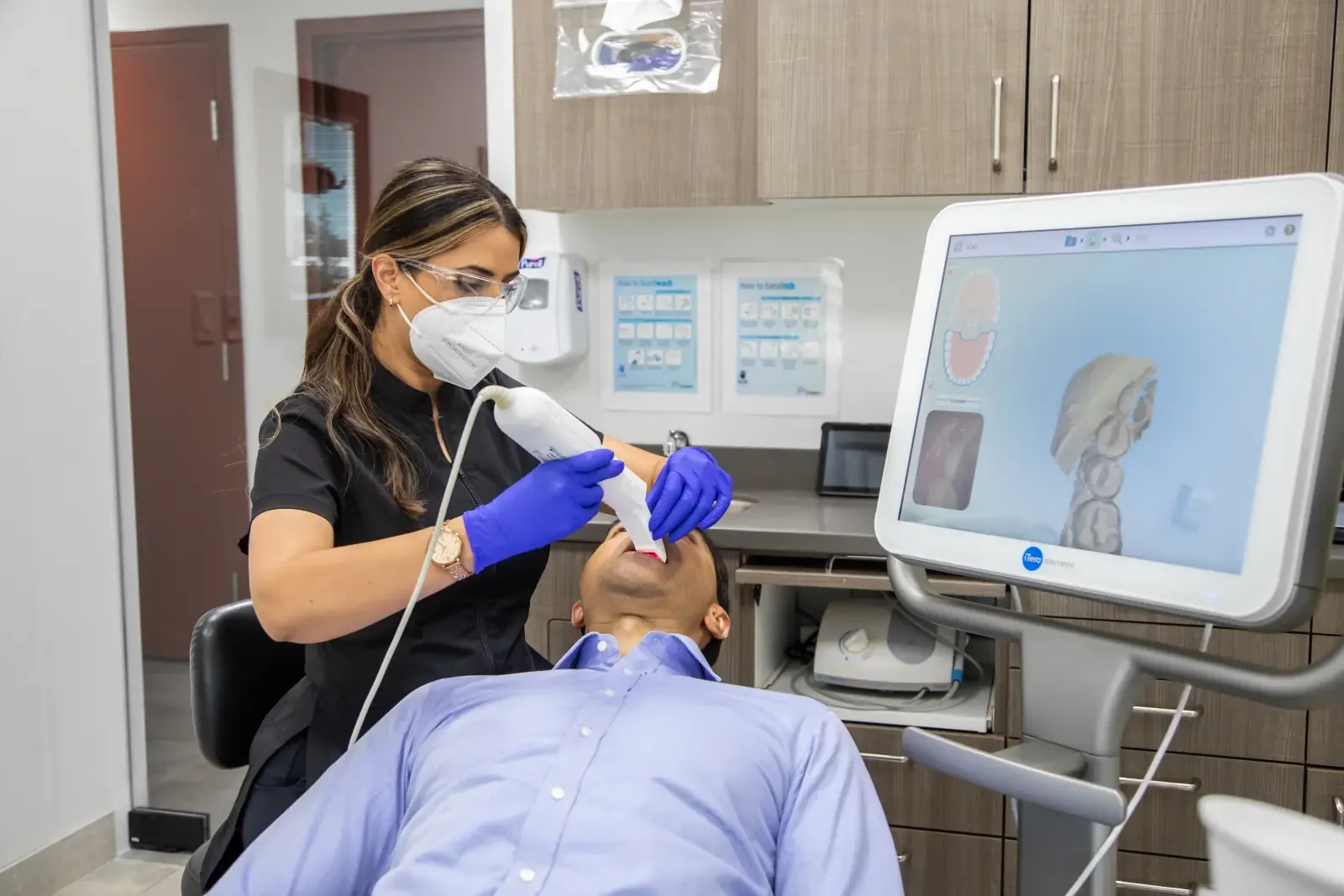
We begin with an oral exam, review of dental history and any symptoms you report. The dentist may use digital X‑rays and the iTero scanner to evaluate tooth wear, restorations and bite, and to determine whether a night guard is suitable or if further assessment or referral is recommended.
02 2. Treatment planning
If a night guard is appropriate, the dentist will discuss the types of appliances, expected benefits and limitations, and the recommended material. You’ll receive a treatment plan tailored to your needs and written treatment and fee details for consideration.
03 3. Impression or digital scan and fabrication
We capture your bite with a digital scan or impression and send detailed specifications to a dental laboratory. The lab constructs the custom night guard to match your occlusion and comfort needs; timing depends on lab workflow and your individual case.
04 4. Fit appointment and follow‑up
When your night guard is ready, we check fit, make any small adjustments and review wearing and cleaning instructions. Follow‑up visits are scheduled as needed to monitor wear and make replacements or modifications over time.