
Assessment
We examine the tooth, gums and bite and use digital X-rays when needed. We then explain whether a crown or a more conservative restoration is appropriate.
Protect and Restore Teeth
A dental crown covers and reinforces a tooth that has been weakened by a large filling, fracture, decay or root canal treatment. At Belman Dental Centre in Midtown Toronto, we use digital X-rays and the iTero Element 3D scanner to plan a restoration designed for your bite and smile.
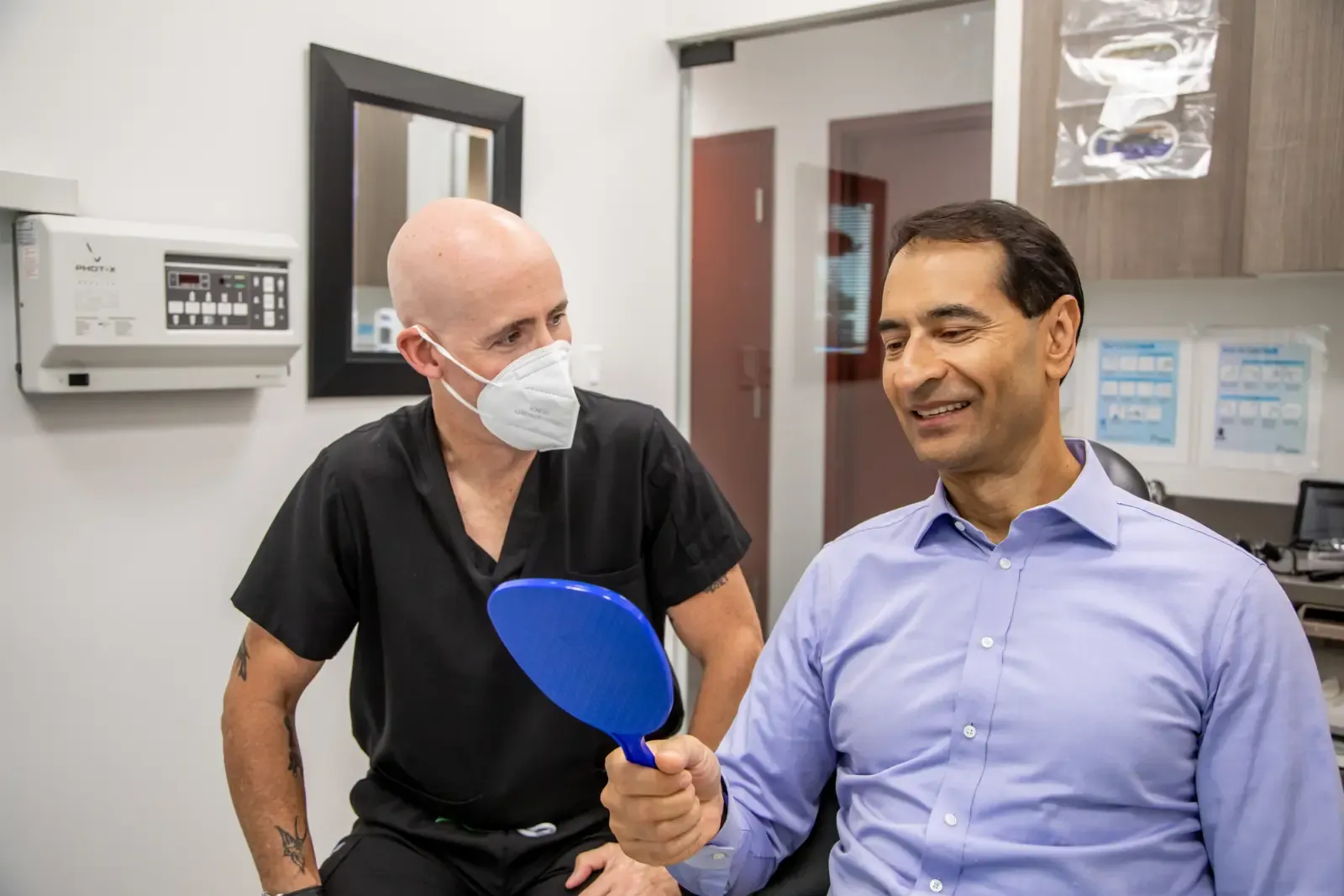
A crown can protect remaining tooth structure when a filling alone may not provide enough support. It may also restore the shape, function and appearance of a tooth that is cracked, heavily worn or significantly discoloured.
Dr. Noah Belman assesses the tooth, supporting bone, gums and bite before recommending treatment. If a crown is not the most conservative option, we will explain suitable alternatives; if specialist care is appropriate, we will coordinate a referral.
Treatment begins with a clinical examination and digital imaging. We discuss material and shade choices, prepare the tooth and take a digital scan or impression for the dental laboratory. A temporary crown protects the tooth while the final restoration is made.
At the fitting visit, we check the crown’s shape, shade, contacts and bite before securing it in place. Local anaesthetic is used during preparation, and nitrous oxide or oral sedation may be available for patients who need additional support.
A crowned tooth still needs daily brushing, flossing and routine professional care. Keeping the crown margin and surrounding gum tissue clean helps protect the supporting tooth and maintain comfort.
Avoid using crowned teeth to open packages or bite very hard objects. If you clench or grind, ask whether a night guard may help protect your restoration. Contact us if a crown feels loose, changes your bite or causes persistent discomfort.
Personalized Care
A conversation and clinical assessment are the best way to understand your options. People often ask about dental crowns when they are experiencing one or more of the following situations.
What to Expect
We examine the tooth, gums and bite and use digital X-rays when needed. We then explain whether a crown or a more conservative restoration is appropriate.
We review materials, shade, timing, comfort options and any preparatory care. Recommendations and fees are confirmed after this assessment.
With local anaesthetic, the tooth is prepared and digitally scanned or impressed. A temporary crown protects it while the dental laboratory creates the final restoration.
We assess fit, appearance and bite before securing the crown. Routine dental visits help us monitor the crown and the supporting tooth.
Planning Your Care
Fees depend on the tooth, selected material, case complexity and whether preparatory treatment is required. We review the recommended treatment and associated fees after a clinical examination and diagnostic imaging.
Our team can explain insurance claim procedures and available financing options. Coverage and reimbursement depend on the details of your individual plan.
Good to Know
A crown may be recommended when a tooth is too weakened, fractured or heavily restored for a filling alone. Crowns are also commonly considered after root canal treatment or when full coverage is needed to restore shape and function.
Modern crown materials can be shaped and shade-matched to blend with surrounding teeth. The final appearance depends on the tooth, material and clinical situation; we review these choices before treatment.
A laboratory-made crown commonly involves a preparation visit followed by a fitting visit after the final restoration is ready. Additional appointments may be needed when preparatory care or adjustments are required.
Brush twice daily, clean between the teeth and attend regular examinations and cleanings. Avoid biting very hard objects, and ask about a night guard if you clench or grind.
Call Belman Dental Centre promptly. Avoid chewing on the affected side and do not try to repair the crown yourself. We will assess whether it can be re-cemented, repaired or replaced.
Ready When You Are
To discuss a damaged or weakened tooth, call 1-416-486-1136 or request an appointment at Belman Dental Centre, 1881 Yonge St., Suite 403. Treatment recommendations, timing and fees depend on an in-person assessment.