
1. Assessment
We take a focused history and perform a clinical exam. Digital X‑rays and iTero 3D scanning are used as needed to evaluate tooth relationships and jaw function before any decisions are made.
Jaw pain relief
If jaw pain, clicking or limited mouth opening is affecting your day, our Midtown Toronto team evaluates possible TMJ concerns and offers conservative treatment plans tailored to your needs. We serve Davisville and Eglinton residents and explain options clearly after an individual assessment.
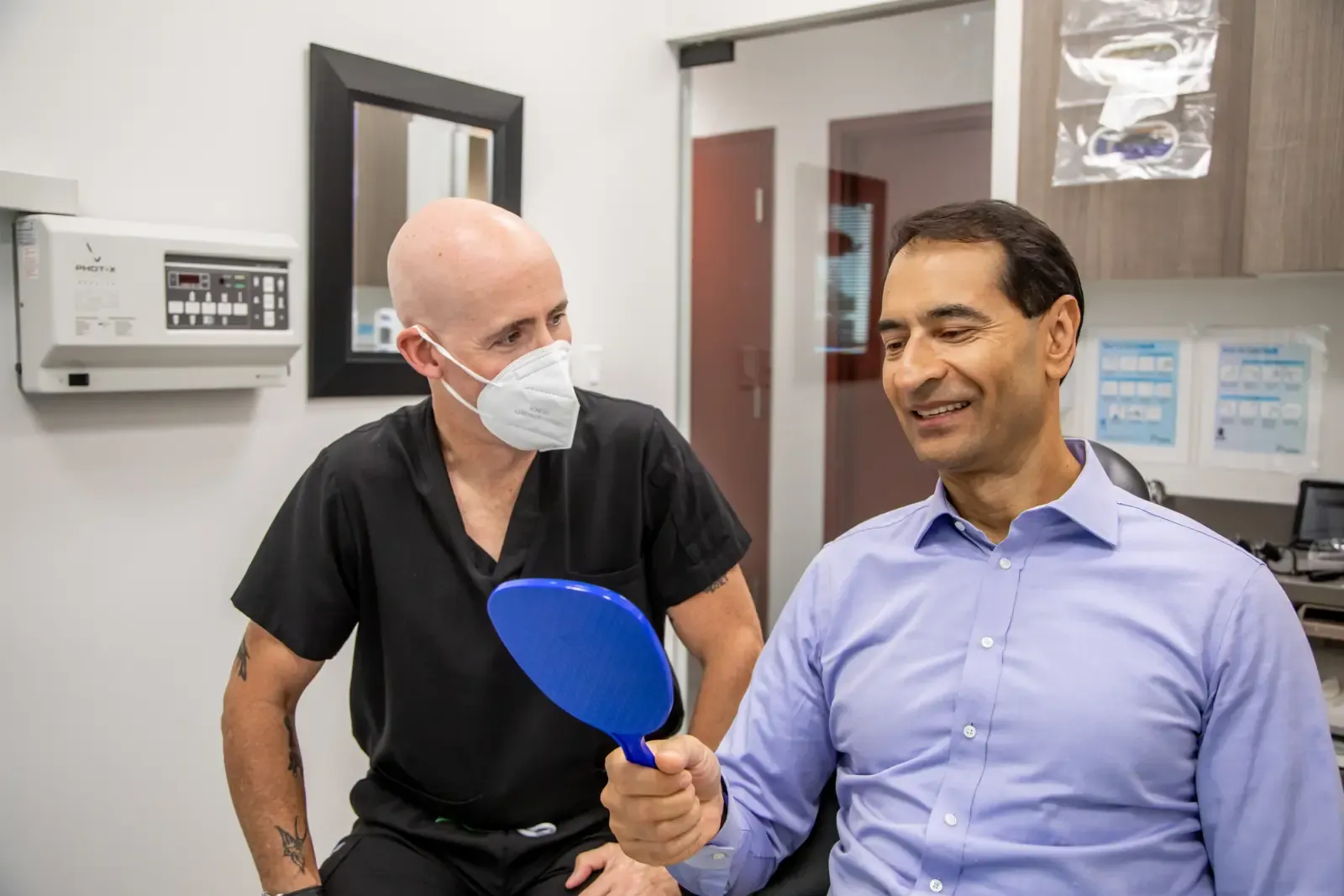
The temporomandibular joint (TMJ) links your lower jaw to your skull and works with muscles that control chewing and speaking. When that joint or the surrounding muscles aren’t comfortable, people often notice pain or changes in jaw movement.
Many TMJ-related complaints are temporary and respond to non‑surgical care. Your dentist will review your symptoms, listen to your concerns and explain realistic next steps before recommending treatment.
Diagnosis begins with a focused history and clinical exam. We use digital X‑rays and the iTero Element 3D scanner when helpful to check dental fit, tooth wear and joint-related concerns that could contribute to symptoms.
Treatment usually starts with conservative measures. Options available at Belman Dental Centre include custom night guards or occlusal splints, bite adjustments, coordinated care with physiotherapy or other specialists, and restorative work when teeth are contributing to jaw strain.
Belman Dental Centre is at 1881 Yonge St., Suite 403, Toronto, serving Davisville, Eglinton and Midtown Toronto. Green P paid parking is available on Yonge St.; there is street parking on Balliol and paid underground parking at 33 Davisville. Call 1-416-486-1136 or email [email protected] to arrange an assessment.
TMJ care at our practice is provided by a general dentist. Dr. Noah Belman completed dental training at the University of Toronto and postgraduate education with the Misch Implant Institute, The Pankey Institute and Spear Education. If your situation requires specialised care, we will discuss referral options.
Personalized Care
A conversation and clinical assessment are the best way to understand your options. People often ask about tmd / tmj treatment when they are experiencing one or more of the following situations.
What to Expect
We take a focused history and perform a clinical exam. Digital X‑rays and iTero 3D scanning are used as needed to evaluate tooth relationships and jaw function before any decisions are made.
Your dentist explains possible contributing factors and outlines conservative treatment options, expected timelines and follow‑up. Recommendations depend on your individual assessment and priorities.
Conservative care often includes self‑management strategies, a custom night guard or occlusal splint, and selective dental adjustments or restorations when appropriate. If a specialist opinion is advisable, we will coordinate a referral.
We monitor symptom changes, adjust appliances as required and reassess treatment progress. Long‑term plans are revised based on response to therapy and any new findings.
Planning Your Care
Treatment costs vary with the complexity of your condition and the options recommended after a clinical assessment. We provide written treatment and fee details tailored to your diagnosis and treatment plan at the time of consultation.
Many patients use extended health benefits or third‑party financing to manage the cost of care. Please check your coverage and ask our front‑desk team for information on payment options and treatment fee information before starting treatment.
Good to Know
A range of factors may contribute, including muscle tension, tooth wear or bite changes, recent dental work, injury and repetitive jaw movements. Often it’s a combination of factors; a clinical assessment helps identify the most relevant contributors.
A custom night guard can reduce tooth wear and lessen muscle strain for many people, but it is not a guaranteed cure. It’s commonly part of an overall conservative approach and its fit and function are reviewed and adjusted over time.
Response times vary. Some patients feel relief within days to weeks with conservative measures, while others require ongoing adjustment and coordination with other therapies. Your dentist will give an estimated timeline based on your specific assessment.
If symptoms are severe, progressive, or do not respond to initial conservative care, your dentist may recommend referral to a specialist such as an orofacial pain specialist, oral surgeon or physiotherapist. Referral decisions are made case‑by‑case.
Changes to bite relationships or prolonged mouth opening during dental procedures can sometimes aggravate jaw discomfort. We take care to minimise strain during treatment and will discuss any concerns that arise after dental work.
Ready When You Are
To discuss jaw pain or related symptoms, call Belman Dental Centre at 1-416-486-1136 or request an appointment online. Recommendations, timelines and fees will be provided after an individual clinical assessment.