
Assessment
Your first appointment includes a medical and dental history review, gum evaluation and any necessary digital X-rays. We measure pockets and look for signs that help guide treatment options.
Gum health care
At Belman Dental Centre in Toronto, we offer conservative, evidence-based periodontal dental care for patients from Davisville, Eglinton and Midtown Toronto. Our general dentist provides periodontal deep cleaning, ongoing maintenance and tailored advice to help protect gum health and overall comfort.
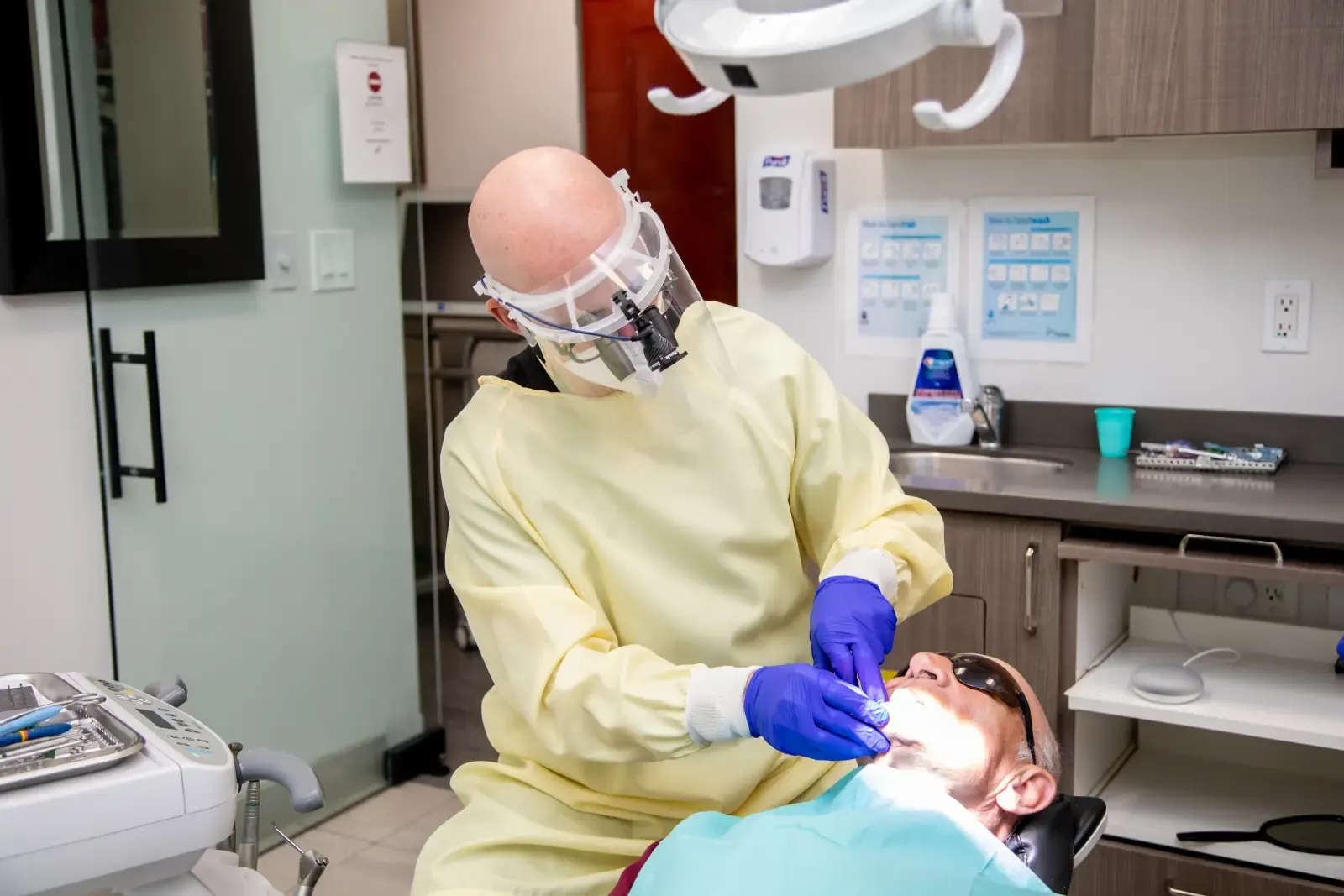
Periodontal care focuses on the gums and the structures that support your teeth. At an initial visit we review your medical and dental history, examine the gums and use digital X-rays as needed to understand the health of the supporting bone and tissues.
Where appropriate, care starts with non-surgical approaches such as thorough scaling and root planing (deep cleaning), combined with personalised home care instruction and scheduled maintenance visits.
Scaling and root planing in Toronto at Belman Dental Centre. Gentle, thorough periodontal care near Davisville and Eglinton. Call to book a consultation.
Explore service ↗Explore personalized gum disease treatment in Toronto at Belman Dental Centre. Request a periodontal assessment and practical care plan.
Explore service ↗Belman Dental Centre offers a range of conservative periodontal treatments performed by our general dentist. Treatment is tailored to each patient after a clinical assessment and may focus on arresting tissue breakdown and stabilizing the mouth for long-term maintenance.
Belman Dental Centre is a general dental practice at 1881 Yonge St., Suite 403, Toronto, Ontario M4S 3C4, serving Davisville, Eglinton and Midtown Toronto. Dr. Noah Belman graduated from the University of Toronto Faculty of Dentistry and completed postgraduate training with the Misch Implant Institute, The Pankey Institute and Spear Education. We use verified technology such as digital X-rays and the iTero Element 3D scanner to support thorough assessment and conservative treatment.
Our general dentist provides most periodontal care in-office. When specialised periodontal surgery or advanced care is appropriate, we will discuss referral options to ensure you receive the right level of care.
Personalized Care
A conversation and clinical assessment are the best way to understand your options. People often ask about periodontal dental care when they are experiencing one or more of the following situations.
What to Expect
Your first appointment includes a medical and dental history review, gum evaluation and any necessary digital X-rays. We measure pockets and look for signs that help guide treatment options.
After assessment we explain options, expected steps and any sedation choices available (nitrous oxide or oral sedation) if these are appropriate. Recommendations and timelines depend on the individual clinical exam.
Treatment typically begins with non-surgical care such as scaling and root planing (deep cleaning). Appointments may be staged over multiple visits to ensure thorough, comfortable care.
Long-term gum health usually requires periodic maintenance visits and home care. We set a follow-up schedule based on your response to treatment and any ongoing risk factors.
Planning Your Care
Fees for periodontal treatment vary depending on the extent of the assessment, the number of visits required and the recommended procedures. specific fee information is provided after a clinical examination so you understand what to expect.
We can review how your benefits might apply and discuss payment or financing options during your visit. If you have questions about fees before treatment, contact our office and we will outline likely costs once we have assessed your individual needs.
Good to Know
A periodontal deep cleaning (scaling and root planing) is a focused cleaning of the tooth surfaces and root areas below the gumline. It helps remove plaque and tartar that can contribute to inflammation, then supports healing when combined with good home care and ongoing maintenance. Your general dentist will explain whether this approach is recommended after a clinical assessment.
Most non-surgical periodontal care at Belman Dental Centre is provided by our general dentist. If your condition requires specialist periodontal surgery or advanced care, we will discuss referral options and coordinate care to ensure you receive the most appropriate treatment.
Many patients experience only mild discomfort during and after non-surgical treatment. We offer local anaesthesia when needed and can discuss nitrous oxide or oral sedation for anxious patients. Your dentist will review comfort options and aftercare instructions before treatment.
Some improvement in gum inflammation and comfort can be noticed within days to weeks after treatment, but healing timelines vary. Your dentist will schedule follow-up visits to monitor progress and adjust the plan as needed based on clinical findings.
Maintenance frequency depends on your individual response to treatment and risk factors. Many patients benefit from periodontal maintenance every three to six months, while others may need a different schedule. We set a personalised plan after your assessment.
Ready When You Are
To book an assessment at Belman Dental Centre call 1-416-486-1136 or visit us at 1881 Yonge St., Suite 403, Toronto, Ontario M4S 3C4. Recommendations, timing and fees will follow an individual clinical examination.