Quick Smile Repairs

Cosmetic Bonding in Toronto

Cosmetic bonding uses tooth‑coloured composite to repair or reshape teeth with minimal removal of tooth structure. At Belman Dental Centre in Toronto — serving Davisville, Eglinton and Midtown — Dr. Noah Belman provides conservative bonding as part of a personalised cosmetic plan.

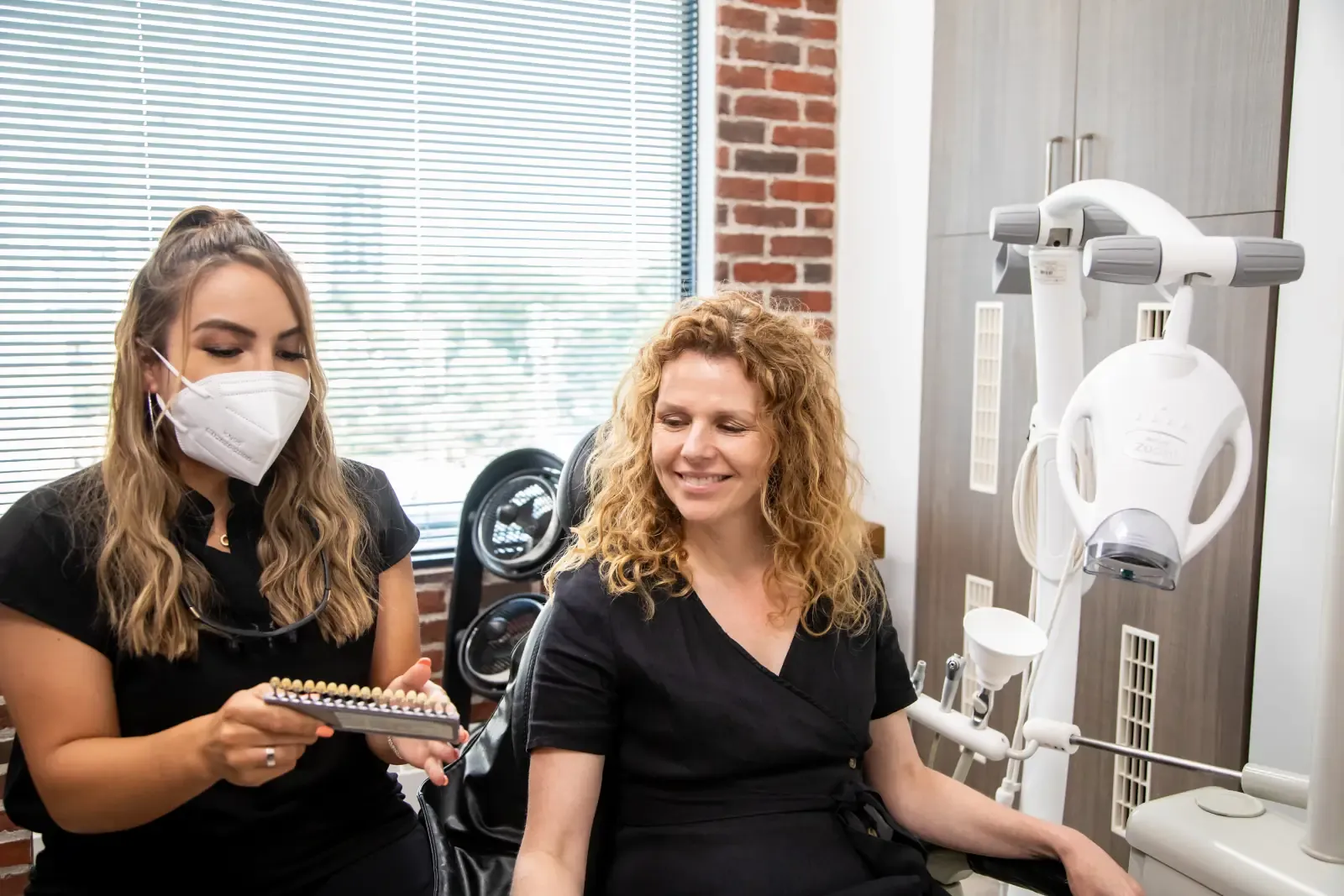
A Belman Dental Centre team member discussing tooth shades with a patient
5.0 215+ Google reviews

What cosmetic bonding can do

Cosmetic bonding applies a layered, tooth‑coloured composite to the enamel to repair small chips, close minor gaps and restore worn or uneven edges. Because the material bonds directly to the tooth, treatment is conservative compared with some other restorative options.

Bonding is suitable for modest cosmetic changes and can be combined with whitening or other restorative work when a broader smile transformation is needed.

  • Repair small chips and cracks
  • Close narrow gaps between front teeth
  • Improve shape and symmetry
  • Mask small discoloured areas

How we approach bonding at Belman Dental Centre

Your care starts with a thorough assessment using digital X‑rays and, when helpful, our iTero Element 3D scanner to document tooth anatomy and how your bite functions. Dr. Noah Belman (University of Toronto Faculty of Dentistry; postgraduate training with the Misch Implant Institute, The Pankey Institute and Spear Education) plans conservative restorations that balance appearance with long‑term tooth health.

On the day of treatment we match shades, prepare the tooth surface minimally, layer and shape composite, then polish to blend the result with adjacent teeth. If your case requires specialised treatment beyond general restorative bonding, we will discuss referral options.

  • Digital imaging and shade matching
  • Minimal enamel preparation
  • Layered composite for natural contours
  • Polish and final adjustments

Care, durability and realistic expectations

Bonded restorations can provide attractive, durable results, but lifespan varies with function, oral habits and how many teeth are treated. Avoid using bonded teeth to open packages or bite very hard objects, and tell your dentist if you grind your teeth — a night guard may be recommended.

Regular dental checkups allow us to monitor bond integrity, refresh edges or polish surfaces as needed. If a bonded area becomes extensively damaged in the future, alternate restorative options may be recommended.

  • Good oral hygiene preserves bonding
  • Avoid hard or sticky foods on bonded areas
  • Notify us about grinding or bite changes
  • Attend regular reviews for maintenance

Personalized Care

Could This Be Right for You?

A conversation and clinical assessment are the best way to understand your options. People often ask about cosmetic bonding when they are experiencing one or more of the following situations.

  • You have a small chip or surface crack you want repaired
  • You’d like to close a narrow gap between front teeth without veneers
  • Front teeth are short or slightly worn and need reshaping
  • There are isolated discoloured spots not improved by whitening
  • You prefer a conservative, reversible cosmetic option to explore

What to Expect

Your Care, Step by Step

Assessment and imaging

We begin with an oral exam, digital X‑rays and photographs; an iTero scan may be used when helpful to visualise changes. We discuss your goals, review alternatives (for example, whitening, veneers or crowns) and determine whether bonding is an appropriate conservative option.

Personalised treatment plan

Based on the assessment we outline a clear plan: which teeth to treat, expected outcomes, and whether preparatory work (such as decay removal or gum care) is needed. We will explain timelines, expected care and whether specialist referral is recommended.

Conservative bonding procedure

Treatment is typically done by a general dentist at the practice. The tooth is lightly prepared, a bonding agent is applied, and composite is layered, sculpted and cured. Local anaesthetic is used only if needed. The dentist finishes and polishes the composite to match adjacent teeth.

Review and maintenance

You’ll have a short follow‑up to check fit and comfort. At routine visits we assess the bonded areas and polish or adjust them as required. If longer‑term or more extensive restorative work becomes necessary, we’ll discuss the next steps or a specialist referral.

Planning Your Care

Cost and payment

The cost of cosmetic bonding depends on the number of teeth treated, the complexity of the work and whether additional treatments (for example, fillings, whitening or gum care) are needed. We provide written treatment and fee details after an individual clinical assessment so you understand the proposed plan and options.

Insurance coverage and financing options vary; our team can explain how proposed fees may fit your coverage and available payment plans. Call Belman Dental Centre at 1-416-486-1136 or arrange a consultation at 1881 Yonge St., Suite 403 to discuss personalised treatment plan and fee information.

Good to Know

Cosmetic Bonding FAQs

How long does cosmetic bonding last?

Longevity depends on how many teeth are treated, your bite and oral habits. With good care and regular dental visits, bonding can last several years, but it may need polishing, repair or replacement over time.

Will bonded teeth look natural?

When bonded by an experienced general dentist using careful shade selection and layering, composite can blend well with surrounding teeth. Results depend on the starting tooth colour and the extent of alteration requested.

Is bonding painful?

Bonding is usually comfortable. In most cases anaesthetic is not required, but a local anaesthetic can be used if you prefer or if tooth preparation is needed. Your comfort and safety are discussed before treatment.

Can bonding be stained or discoloured?

Composite is more prone to staining than natural enamel or porcelain. Avoid frequent consumption of staining substances (coffee, tea, red wine, tobacco) and maintain regular polishing at dental visits to reduce surface discolouration.

Can bonding fix large gaps or severely damaged teeth?

Bonding is best for modest cosmetic changes. Larger gaps or extensively damaged teeth may be better treated with veneers, crowns or other restorations; we will recommend the most appropriate option and arrange referral if specialist care is indicated.

Ready When You Are

Book a cosmetic bonding consultation

To discuss whether cosmetic bonding is right for you, call Belman Dental Centre at 1-416-486-1136 or arrange an appointment at 1881 Yonge St., Suite 403, Toronto. Recommendations, timelines and fees depend on an individual clinical assessment.