
Dental implants replace missing teeth with titanium posts and restorations that function like natural teeth. They’re a widely used option when replacing one or more teeth, but implants aren’t the only choice.
This article explains common signs that implants may be considered, what a clinical assessment typically includes and the basic steps of implant treatment. This is general information and not a diagnosis — an in‑office exam is needed to determine appropriate care.
What a dental implant is and how it helps
A dental implant consists of a small titanium post placed into the jawbone to act as an artificial root, plus an abutment and a crown (or other restoration) attached on top. Implants can support single crowns, bridges or to anchor dentures for improved stability.
Implants aim to restore chewing function and appearance and can help prevent neighbouring teeth from shifting. Whether implants are suitable depends on your oral health, bone quantity and overall medical status.
- Replaces a single tooth or multiple teeth
- Can stabilise dentures or support fixed bridges
- Requires adequate bone and good periodontal health
Common signs that implants may be appropriate
You might be a candidate for implant therapy if you have a missing tooth or teeth and want a long‑term replacement option. Certain symptoms or practical problems often prompt patients to discuss implants with their dentist.
Because every mouth is different, these signs are prompts for a clinical discussion rather than a diagnosis.
- One or more missing teeth causing a cosmetic or functional concern
- Loose or uncomfortable partial/full dentures that affect chewing or speech
- Visible shifting or tilting of neighbouring teeth into a gap
- Difficulty chewing or avoiding certain foods because of missing teeth
- Bone loss visible on prior X‑rays or a sunken facial appearance around missing teeth
What happens during an assessment
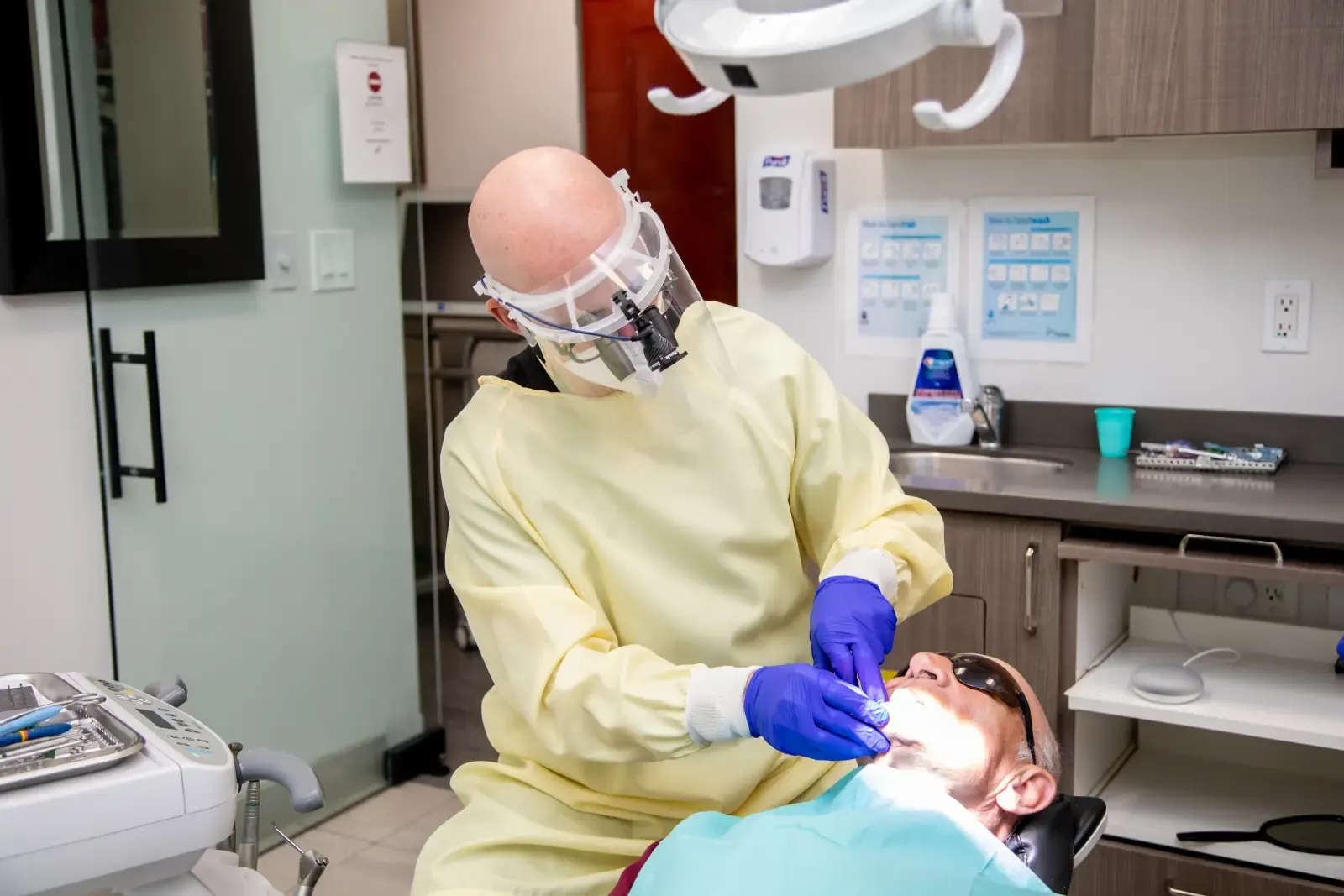
A thorough assessment includes a review of your dental and medical history, an oral exam and imaging to evaluate bone and surrounding structures. Belman Dental Centre uses digital X‑rays and the iTero Element 3D scanner to support planning and communication.
The dentist will also review periodontal (gum) health, discuss any medications or conditions that affect healing and explain options such as bone grafting, timing of placement and restoration choices.
- Clinical exam of gums, bite and neighbouring teeth
- Digital X‑rays and 3D scanning to assess bone and guide placement
- Discussion of sedation options (nitrous oxide or oral sedation may be available) and risks
- Personalised treatment plan and timeline based on findings
Typical treatment steps, risks and alternatives
Implant treatment commonly involves placement of the implant post, a healing period while the implant integrates with bone, and later attachment of the abutment and crown. Some cases require bone grafting or staged procedures; timelines vary from months to longer depending on healing.
As with any surgery, implants carry risks such as infection, nerve irritation, sinus involvement (for upper molars) and implant failure. Your dentist will explain benefits, risks and alternative options such as bridges or removable dentures so you can make an informed choice.
- Surgical placement of the implant post and a healing phase
- Restoration placement (crown, bridge or denture) after appropriate healing
- Bone grafting or sinus lift when additional bone is needed
- Consideration of alternatives and the need for long‑term maintenance
Good to Know
Questions About This Topic
How long do dental implants last?
Implant components and restorations can last many years with good oral hygiene and regular dental care, but longevity depends on factors such as gum health, bone support, smoking and maintenance. Your dentist will discuss expected timelines for your situation.
Is implant surgery painful?
Most patients experience little pain during the procedure because of local anaesthesia and, when appropriate, nitrous oxide or oral sedation. Some soreness and swelling are common after surgery; the practice will provide aftercare instructions and pain‑management options.
Am I a candidate for dental implants?
Candidacy depends on dental and medical factors including bone volume, gum health and overall health. Only a clinical assessment with imaging can determine whether implants are a suitable option and whether preparatory procedures are needed.
Dental implants are a reliable option for many people with missing teeth, but suitability and planning depend on a careful clinical assessment. Discussing symptoms, expectations and alternatives with your dentist helps ensure a treatment plan tailored to your needs.
If you live in Davisville, Eglinton or Midtown Toronto and would like to explore whether implants are appropriate, contact Belman Dental Centre at 1881 Yonge St., Suite 403, Toronto, Ontario M4S 3C4 or call 1-416-486-1136 to arrange an assessment. For trouble breathing, uncontrolled bleeding or serious facial trauma, call 911 or go to your nearest emergency department.
Educational note: This article provides general information and is not a diagnosis or a substitute for care from a dental professional who has examined you.