
Choosing between braces and Invisalign often comes down to clinical needs, lifestyle and how much time you can commit to care. Both options can move teeth effectively in many cases, but they differ in appearance, how they’re worn and how predictable certain tooth movements can be.
This article explains the main differences to help you prepare questions for your dental appointment. Belman Dental Centre offers Invisalign and uses digital X-rays and the iTero Element 3D scanner to plan orthodontic care; recommendations, timelines and fees require an individual clinical assessment.
How each system moves teeth
Traditional braces use fixed brackets bonded to teeth and wires that apply continuous force to guide tooth movement. Adjustments are made periodically by an orthodontist or dentist to change wire tension and direct the movement.
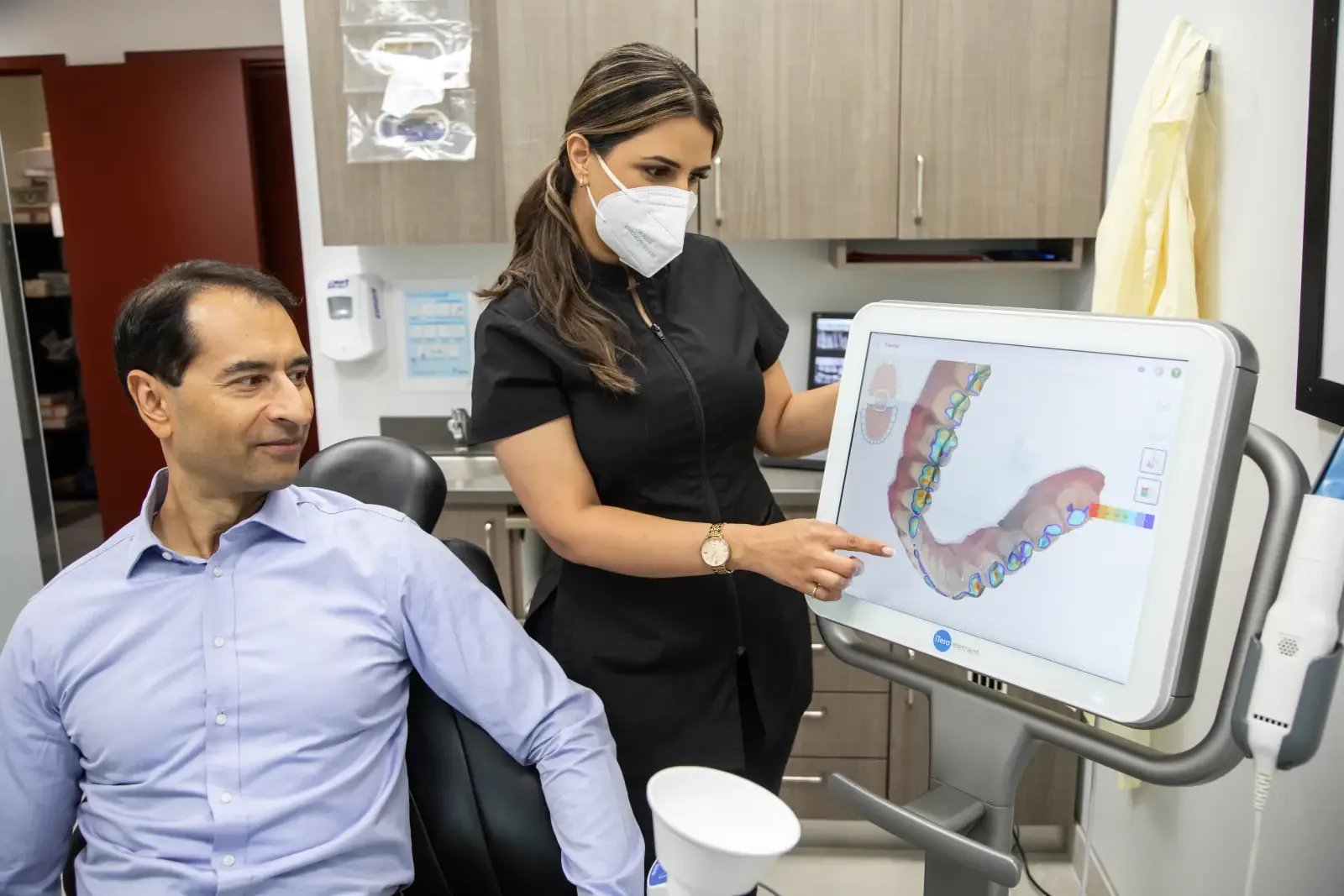
Invisalign uses a series of custom-made, removable clear aligners. Each aligner is slightly different and shifts teeth incrementally when worn as prescribed. Digital scanning with tools such as the iTero Element 3D scanner allows clinicians to plan and visualise the proposed tooth movements.
- Braces: brackets and wires remain on teeth until the end of treatment and can address complex tooth movements.
- Invisalign: removable clear trays worn most of the day; good for patients who can follow strict wear schedules.
- Both methods depend on careful treatment planning and patient cooperation for best results.
Appearance, comfort and daily life
Appearance is one of the biggest differences: braces are visible to varying degrees depending on bracket type, while Invisalign aligners are low-profile and transparent. Comfort varies by person — braces can irritate lips and cheeks initially, and aligners may feel bulky at first.
Daily life changes differ too. Braces restrict certain foods and require special cleaning tools. Invisalign trays are removed to eat and drink (except water), but they must be cleaned regularly and worn about 20–22 hours a day for typical effectiveness.
- Cleaning: braces require brushing around brackets and using floss threaders; aligners are removed for cleaning and brushing teeth.
- Eating: avoid hard or sticky foods with fixed appliances; with aligners you remove them to eat but should avoid sugary or very acidic drinks while wearing trays.
- Speech: both systems can cause short-term changes in speech as you adapt.
Treatment time, predictability and suitability
Treatment length depends on the complexity of the tooth movements required, patient age, biological response and adherence to instructions. Some mild to moderate alignment issues are commonly treated with Invisalign, while other cases involving large bite corrections or complex rotations may be better managed with fixed appliances.
Predictability improves with thorough diagnosis and the right case selection. Compliance is a key factor for removable aligners: skipping wear time can lengthen treatment or compromise outcomes. Only a clinical assessment, including digital imaging, can determine which option is appropriate for an individual patient.
- Factors that affect timelines: severity of misalignment, patient compliance, growth in teens, and need for additional procedures (extractions, restorations).
- Some tooth movements (e.g., certain rotations, vertical control) can be more challenging for clear aligners.
- Your dentist will review options and expected timeframes after a full exam and imaging.
Appointments, technology and what to expect
Appointment frequency and procedures differ between systems. Braces typically need regular in‑office adjustments. Invisalign treatment usually involves a series of aligner pickups or shipments and periodic check-ups so the team can monitor progress and make refinements using digital records.
Belman Dental Centre uses digital X-rays and the iTero Element 3D scanner to capture precise impressions and help visualise treatment plans. Fees, number of visits and estimated timelines depend on a personalised assessment and treatment plan.
- Initial visit: clinical exam, digital X-rays and a 3D scan to assess alignment and bite.
- Monitoring: scheduled reviews to check tooth movement and compliance; adjustments or refinements may be recommended.
- Comfort options: sedation choices such as nitrous oxide and oral sedation are available for some dental procedures—discuss suitability with the team.
Good to Know
Questions About This Topic
Is Invisalign as effective as braces?
Invisalign can be effective for many mild to moderate alignment issues. For some complex movements or bite corrections, fixed appliances are often recommended. Only a clinical assessment with imaging can determine which option is likely to be more effective for your situation.
How long will treatment take?
Treatment time varies widely depending on the problem’s complexity, patient age and compliance. Some cases finish in several months while others take longer. Your dentist will provide an estimated timeline after a full exam and digital scan.
Will I need to avoid certain foods with Invisalign?
You remove aligners to eat and drink anything other than water, so there are no food restrictions while eating. It’s important to clean your teeth before reinserting aligners to reduce staining and decay risk.
Choosing between braces and Invisalign means balancing clinical needs, lifestyle and willingness to follow care instructions. This article provides general information and is not a diagnosis; a personalised recommendation requires an in‑office assessment with your dentist.
If you live in Toronto and would like to discuss options, book a consultation at Belman Dental Centre, 1881 Yonge St., Suite 403, Toronto, ON M4S 3C4 or call 1-416-486-1136 to arrange an assessment.
Educational note: This article provides general information and is not a diagnosis or a substitute for care from a dental professional who has examined you.