
Full‑mouth dental rehabilitation is a treatment approach that looks at the entire mouth rather than a single tooth. It brings together restorative, periodontal and cosmetic procedures — such as crowns, bridges, implants, periodontal therapy and veneers — to improve chewing, comfort, dental health and appearance.
This article provides general information about common components and the usual process. It is educational only and not a diagnosis; recommended treatments, timelines and fees depend on a clinician’s assessment of your individual needs.
What full‑mouth rehabilitation can include
There is no single recipe for full‑mouth rehabilitation. The plan is tailored to the patient’s oral health, bite (occlusion), aesthetic goals and medical history. Treatments are combined so they work together toward a stable, comfortable result.
Typical treatments used within a comprehensive plan include the following:
- Restorations: crowns, bridges and cosmetic bonding to repair or replace damaged teeth
- Dental implants and implant restorations to replace missing teeth
- Periodontal therapy and deep cleaning to treat gum disease before restorative work
- Root canal therapy when teeth require endodontic treatment prior to restoration
- Removable options: partial or complete dentures when appropriate
Who might benefit from full‑mouth care
People who have widespread tooth wear, many missing or failing teeth, persistent bite problems, chronic jaw pain or advanced gum disease may be considered for full‑mouth rehabilitation. Cosmetic concerns, difficulty chewing or recurring restorations that fail are other reasons to explore a comprehensive plan.
Whether full‑mouth rehabilitation is suitable depends on a detailed clinical exam, imaging and discussion of priorities and constraints. A clinician will review medical history and may prioritise disease control (for example, periodontal treatment) before definitive restorative phases.
How the evaluation and treatment planning work
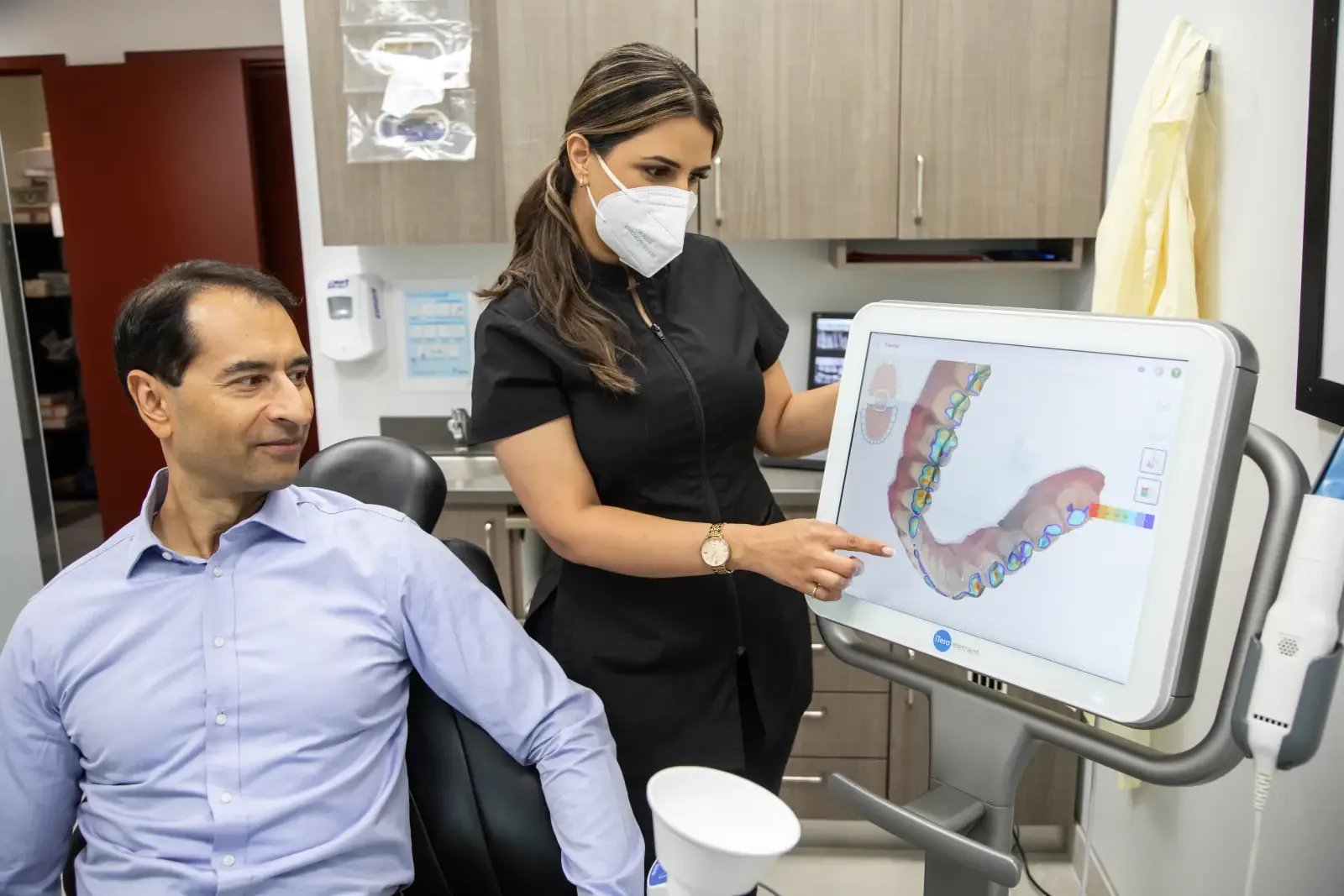
A thorough assessment usually starts with a comprehensive oral exam, digital X‑rays and 3D scanning when needed. At Belman Dental Centre we use verified digital X‑rays and the iTero Element 3D scanner to document tooth position and bite relationships for planning restorations and implants.
Planning often proceeds in phases: initial disease control (gum therapy, extractions if needed), provisional restorations to test function and aesthetics, then definitive restorations such as crowns, bridges or implant crowns. Nitrous oxide and oral sedation are available options to help manage anxiety during treatment.
- Clinical exam and imaging (digital X‑rays, iTero scans)
- Study models, bite records and diagnostic wax‑ups or digital mock‑ups
- Phase 1: disease control (periodontal care, urgent extractions)
- Phase 2: provisional restorations and function testing
- Phase 3: definitive restorations and long‑term maintenance planning
Recovery, maintenance and realistic expectations
Recovery and timelines vary widely. Implant placement requires healing time before crowns are attached; crowns and bridges commonly need multiple visits for preparation and fit. Discomfort is usually managed with over‑the‑counter pain relief and the sedation options mentioned above when appropriate.
Long‑term success depends on regular maintenance: daily oral hygiene, periodic professional cleanings, and monitoring of restorations and gum health. Your dentist may recommend night guards, tailored follow‑up intervals and referral to specialists when complex care is required.
- Follow the practice’s post‑op instructions for comfort and healing
- Maintain excellent daily oral hygiene and attend recall appointments
- Report new pain, swelling or loose restorations promptly
- Night guards can protect restorations from grinding or clenching
Good to Know
Questions About This Topic
How long does a full‑mouth rehabilitation take?
Timelines depend on the treatments involved. Simple restorative plans may finish in weeks; implant‑based reconstructions can take several months because of healing phases. Your dentist will provide a personalised timeline after assessment.
Will treatment be painful and what sedation is available?
Local anaesthesia keeps procedures comfortable for most patients. Nitrous oxide (laughing gas) and oral sedation are available at the practice to help with anxiety. Expect some soreness after procedures; your dentist will advise on pain control and aftercare.
What should I do in a dental emergency during treatment?
For life‑threatening situations such as trouble breathing, uncontrolled bleeding or serious facial trauma, call 911 or go to an emergency department immediately. For severe dental pain, swelling or a loose restoration outside office hours, contact the practice for guidance or seek urgent dental care as advised.
Full‑mouth dental rehabilitation is a comprehensive, staged approach that can address complex combinations of missing, damaged or failing teeth and underlying gum or bite problems. This page offers general education and is not a diagnosis; a personalised treatment plan, timeline and fee information require an in‑office assessment.
Belman Dental Centre is a general dental practice at 1881 Yonge St., Suite 403, Toronto, Ontario M4S 3C4, serving Davisville, Eglinton and Midtown Toronto. Phone: 1-416-486-1136. Dr. Noah Belman graduated from the University of Toronto Faculty of Dentistry and completed postgraduate training with the Misch Implant Institute, The Pankey Institute and Spear Education. The practice uses verified digital X‑rays and the iTero Element 3D scanner and offers implants, crowns and bridges, Invisalign, in‑office whitening and full‑mouth reconstruction among its services. If you think comprehensive care might be right for you, please contact the office to arrange a consultation.
Educational note: This article provides general information and is not a diagnosis or a substitute for care from a dental professional who has examined you.