Cosmetic Veneers

Veneers in Toronto

At Belman Dental Centre in Toronto, we design custom porcelain and composite veneers to improve the look of front teeth. Serving Davisville, Eglinton and Midtown Toronto, Dr. Noah Belman and our team use conservative preparation, digital imaging and colour-matching to create natural-looking results.

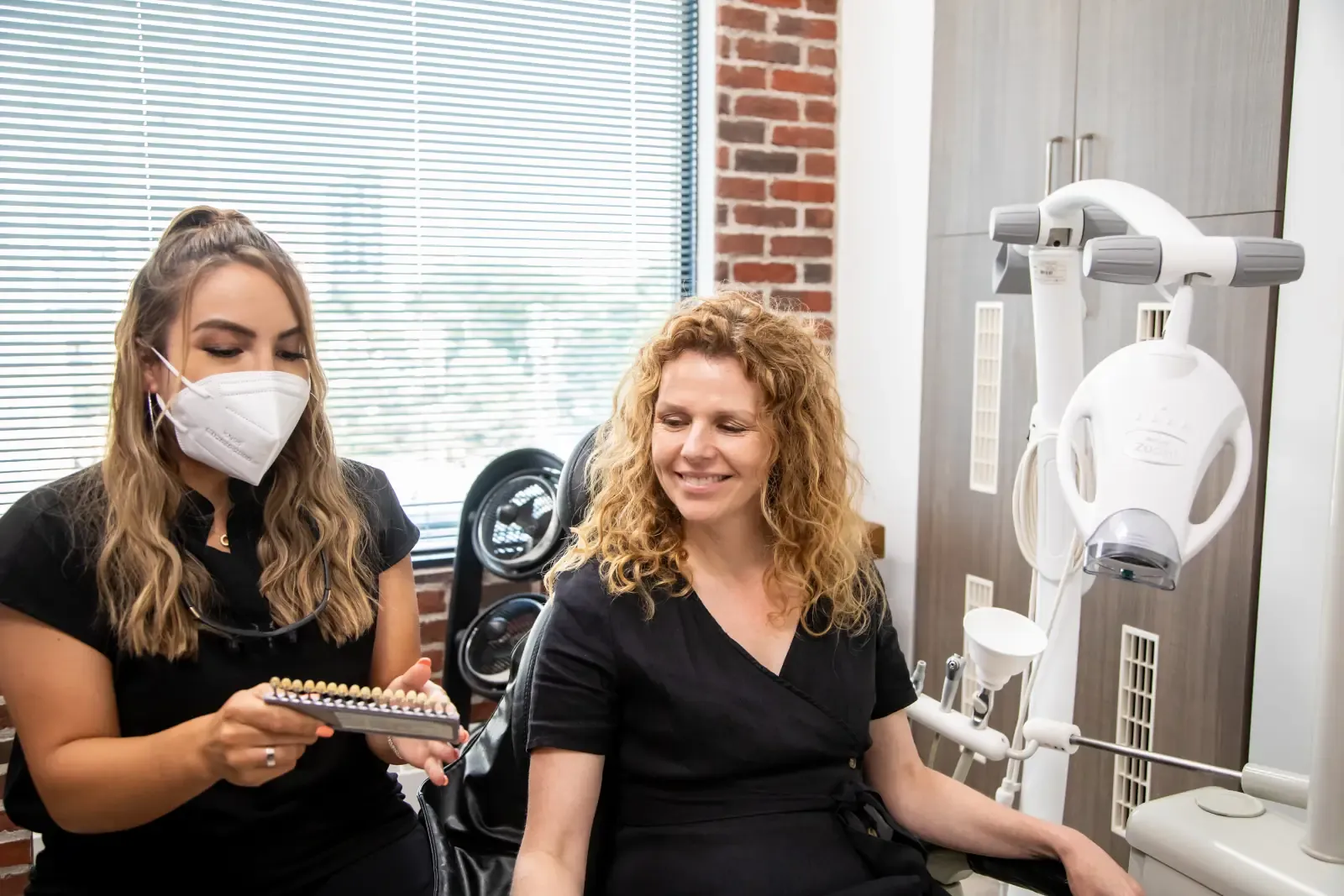
A Belman Dental Centre team member discussing tooth shades with a patient
5.0 215+ Google reviews

What are veneers?

Veneers are thin, custom-made shells bonded to the front surface of teeth to change their colour, shape or length. They are a cosmetic option for improving the appearance of one tooth or an entire smile and are crafted to match your natural teeth.

Veneers can address common cosmetic concerns and are planned to suit your facial proportions and smile goals. Final recommendations depend on a clinical assessment and discussion of alternatives.

  • Discolouration that doesn’t respond to whitening
  • Chipped or broken teeth
  • Irregularly shaped or sized teeth
  • Teeth that are worn down
  • Small gaps between front teeth

Materials and appearance

Veneers are typically made from porcelain or composite materials. Porcelain veneers are prized for their translucency and stain resistance, while composite veneers can be completed more conservatively and sometimes in fewer visits. Your dentist will explain the pros and cons of each option.

We use digital tools — including digital X-rays and the iTero Element 3D scanner — to plan veneer cases, capture accurate impressions and refine colour-matching so the result looks natural alongside your adjacent teeth.

  • Porcelain: natural translucency and durability
  • Composite: conservative and repairable
  • Digital scanning and shade selection for lifelike results

Preparing and placing veneers

Preparation often involves conservative reshaping of the tooth surface; some enamel removal may be required and local anaesthesia can be used for comfort. Impressions or a digital scan are taken to have the laboratory craft your veneers, and temporary restorations may be placed while you wait for the final pieces.

When the veneers return from the lab they are closely checked for fit and shade before being bonded. Dr. Noah Belman, a general dentist who graduated from the University of Toronto Faculty of Dentistry and completed postgraduate training with the Misch Implant Institute, The Pankey Institute and Spear Education, provides veneer treatment at our office. If your case needs specialist care — for example advanced periodontal or restorative work — we will recommend referral.

Personalized Care

Could This Be Right for You?

A conversation and clinical assessment are the best way to understand your options. People often ask about veneers when they are experiencing one or more of the following situations.

  • You have tooth discolouration that hasn’t improved with whitening and want a lasting cosmetic option.
  • You have small chips, minor fractures or uneven tooth edges on your front teeth.
  • You’re unhappy with the shape or proportions of one or more front teeth.
  • You have minor gaps between front teeth you’d like to close cosmetically.
  • You have overall good oral health; a clinical exam is needed to confirm suitability.

What to Expect

Your Care, Step by Step

1. Assessment and consultation

We start with a thorough oral exam, photos and digital X-rays as needed, and discuss your goals. The iTero scanner may be used for a digital impression. Based on the assessment, we’ll explain whether veneers or another option is more appropriate.

2. Treatment planning

Your dentist selects materials, shades and the number of teeth to treat. A mock-up or digital preview can show expected results. We’ll outline required preparatory treatments, timelines and provide written treatment and fee details.

3. Preparation and placement

On the treatment day we prepare the teeth, take final scans or impressions, and place temporary restorations if needed. Lab-made veneers are bonded in a subsequent visit; local anaesthesia, nitrous oxide or oral sedation may be offered for comfort.

4. Follow-up and maintenance

After bonding we check your bite, make final adjustments and review care instructions. Regular dental exams and good oral hygiene help maintain veneers; we’ll schedule follow-up visits and coordinate referrals if additional specialist care is required.

Planning Your Care

Costs and payment

Fees for veneers vary depending on the number of teeth treated, the chosen material (porcelain or composite), any preparatory work and the complexity of the case. Personalised treatment plan and fee information are provided after a clinical assessment so you understand the scope and options.

We will discuss how proposed fees relate to possible insurance coverage and financing. Coverage varies by plan; our team can prepare written treatment and fee details for submission to your insurer and explain available payment plans or third-party financing options.

Good to Know

Veneers FAQs

How long do veneers typically last?

Longevity depends on the material, how well you care for them and factors like bite forces. Porcelain veneers commonly last many years with proper care; composite veneers tend to have a shorter life span but can be repaired. Regular maintenance and avoiding harmful habits help extend the serviceable life of any veneer.

Are veneers reversible?

Because placing veneers usually requires some alteration of enamel, the process is not always fully reversible. In some cases less invasive options such as cosmetic bonding may be possible. Your dentist will review all options and the long-term implications during the consultation.

Will getting veneers be painful?

Local anaesthesia can help keep you comfortable during tooth preparation. Mild sensitivity or soreness may follow treatment and usually settles with time. Tell us about dental anxiety before your visit so the team can discuss appropriate comfort options.

How many appointments does the veneer process require?

A typical pathway involves an initial consultation, a preparation visit with scans or impressions, and a final bonding appointment. Depending on planning and whether temporaries are used, timelines can vary; laboratory fabrication usually takes time, so your dentist will outline the expected schedule for your case.

What is the difference between veneers, crowns and bonding?

Veneers cover just the front surface of a tooth and are primarily cosmetic. Crowns encircle the entire tooth and are used when more tooth structure must be restored. Bonding uses tooth-coloured resin applied directly to the tooth and is less invasive but may stain or chip more easily. Dr. Belman will recommend the most suitable option or refer to a specialist if complex restorative or periodontal care is needed.

Ready When You Are

Request a consultation

Call 1-416-486-1136 or visit Belman Dental Centre at 1881 Yonge St., Suite 403, Toronto, ON M4S 3C4 to request a veneer consultation. We’ll arrange an assessment, discuss options and provide written treatment and fee details tailored to your needs in Davisville, Eglinton and Midtown Toronto.